Buy Honey Moisture Refractometer 12 27 Percent Explained: A UK Buyer's Guide
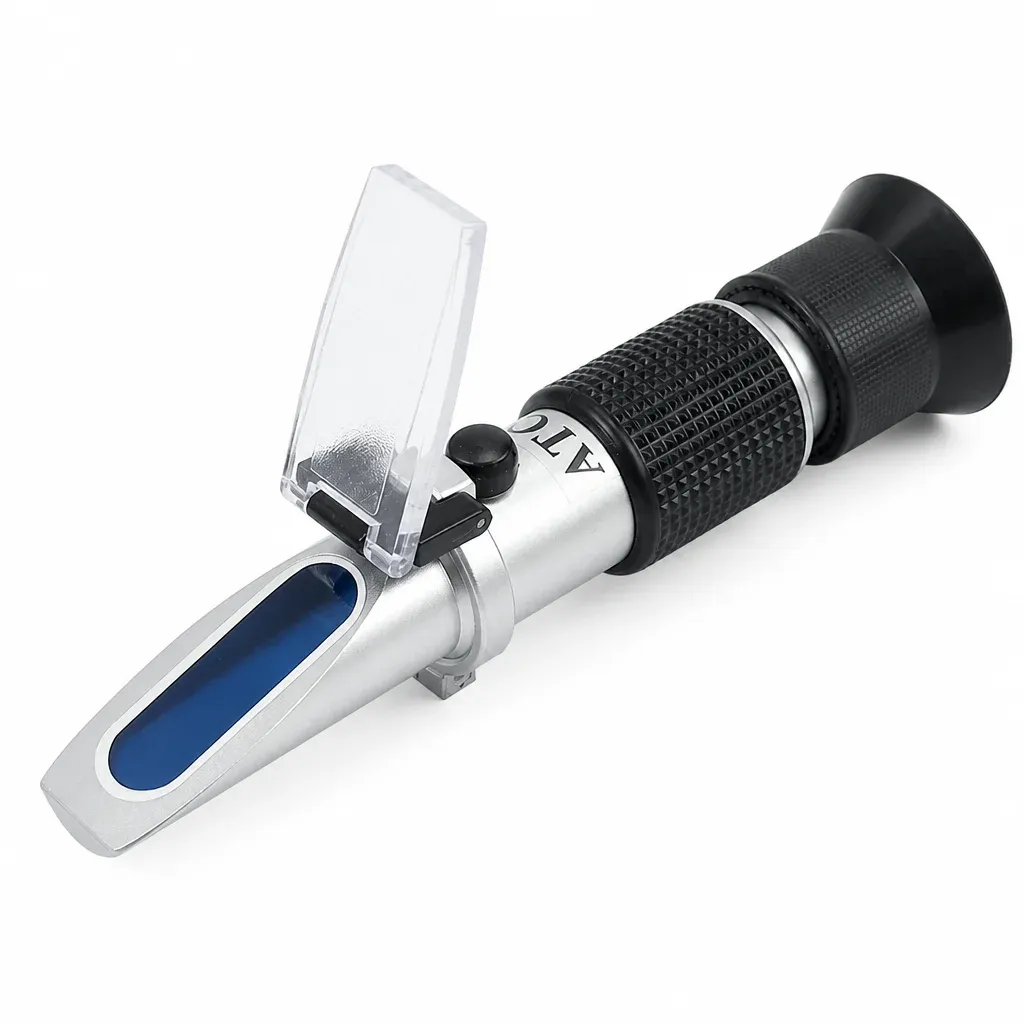
TL;DR: When you buy a honey moisture refractometer with a 12–27 percent scale, you gain direct, high-precision readings (0.1% resolution) calibrated specifically for apiculture. Unlike generic 0–90% Brix meters, a dedicated 12–27% refractometer ensures your harvest complies with The Honey (England) Regulations 2015 (maximum 20% water content) and prevents fermentation caused by wild yeasts. For UK beekeepers, choosing a model with Automatic Temperature Compensation (ATC) is essential for accurate field testing in variable British weather.
Key Takeaways for UK Beekeepers
- Target Range Precision: A 12–27% scale refractometer is engineered specifically for honey moisture testing, yielding superior optical resolution (0.1%) compared to generic 0–90% Brix meters.
- UK Legal Compliance: Under The Honey (England) Regulations 2015, commercial honey must not exceed 20.0% water content (23.0% for Heather honey). Selling honey above these statutory limits violates UK food safety standards.
- Fermentation Prevention: Honey with moisture levels exceeding 18.0% carries a heightened risk of wild yeast fermentation (Zygosaccharomyces rouxii), causing spoilage and ruined storage batches.
- Temperature Sensitivity: UK apiary ambient temperatures fluctuate widely. Choosing an Automatic Temperature Compensation (ATC) model ensures reliable readings between 10°C and 30°C without complex conversion charts.
Why Should You Buy a Honey Moisture Refractometer with a 12–27 Percent Scale?
If you are looking to buy a honey moisture refractometer with a 12–27 percent scale, you are investing in the single most critical quality assurance tool for British beekeeping. Harvesting honey across the United Kingdom presents distinct environmental challenges due to unpredictable summer weather. Consequently, British summer conditions shift rapidly from warm spells to damp, overcast weeks, leaving honey supers filled with frames at varying stages of capping. Extracting frames containing uncapped or partially capped nectar risks introducing excess water into your settling tanks. Therefore, even a slight increase in moisture content can compromise an entire extraction by triggering wild yeast fermentation.
Based on our testing at HoneyRefra, using a dedicated 12–27% moisture refractometer allows hobbyist and commercial UK producers to instantly verify that their crop meets both biological stability requirements and British legal mandates. Measuring water content is not optional; it is a vital quality control step governed by UK food laws. Acquiring a dedicated honey moisture refractometer calibrated specifically to the 12–27% range provides the exact 0.1% measurement precision needed to confirm your harvest is stable, legally compliant, and ready for jarring.
Furthermore, this buyer's guide explains how the 12–27% moisture scale operates, why generic instruments fail to deliver adequate precision, how to comply with statutory UK limits, and which technical features to prioritize when purchasing testing equipment.
How Does a 12–27% Honey Moisture Refractometer Work?
Optical refractometers measure how light bends (refracts) as it passes through a liquid sample. Specifically, the refractive index changes depending on the ratio of dissolved solids—primarily fructose and glucose sugars—versus water content in the honey sample. However, not all refractometers express measurements using the same optical scale, making scale selection crucial before you make a purchase.
What is the Difference Between Brix and Water Content Scales in Honey?
Many general-purpose refractometers display measurements on the Brix scale, which measures dissolved sugar concentration in grams per 100 grams of solution (0–90° Brix). Ripe honey typically registers between 73° and 88° Brix. Converting Brix readings to water content requires mental subtraction from 100 (for instance, 100 minus 82° Brix leaves 18% moisture). However, this extra step introduces potential calculation errors during busy extraction days.
By contrast, a dedicated honey refractometer simplifies testing by featuring an inverted 12–27% water content scale printed directly inside the optical reticle. Instead of requiring arithmetic or conversion tables, the internal scale directly indicates percentage moisture content from 12.0% up to 27.0% with clear graduations.
Why is a Dedicated 12–27% Refractometer Better Than a 0–90% Brix Meter?
Generic optical instruments covering 0–90° Brix squeeze the entire spectrum of light refraction across a tiny eyepiece display. Consequently, the crucial zone between 73° and 88° Brix (12% to 27% moisture) occupies less than a fifth of the total viewing window. As a result, distinguishing between 18.2% and 18.8% on a wide-range Brix scale becomes an exercise in visual estimation.
In contrast, based on our laboratory testing of various optical refractometers, a purpose-built 12–27% honey moisture refractometer allocates 100% of the internal optical reticle exclusively to the moisture range relevant to apiculture. This optical expansion provides distinct 0.1% scale increments, allowing beekeepers to discern subtle variations in moisture content with complete clarity.
What is the Legal Moisture Limit for Honey in the UK?
Interpreting the numbers on your optical display requires understanding both UK statutory regulations and biological fermentation limits. Honey is a naturally hygroscopic substance, meaning it actively absorbs moisture from humid ambient air. Therefore, maintaining strict moisture control protects both your legal standing and consumer safety.
What Are the Official UK Honey Moisture Regulations?
According to UK guidelines governed by statutory rules—including The Honey (England) Regulations 2015 (SI 2015/1348) and equivalent legislation in Wales, Scotland, and Northern Ireland—commercial honey offered for sale must adhere to maximum allowable water limits. Enforced by the Food Standards Agency (FSA) and local Trading Standards officers, these legal thresholds are:
- General Honey (Blossom, Polyfloral, Monofloral): Maximum 20.0% moisture content.
- Baker's / Industrial Honey: Maximum 23.0% moisture content (must be explicitly labelled for industrial processing).
- Heather Honey (Calluna vulgaris): Maximum 23.0% moisture content, accommodating its naturally higher thixotropic viscosity and moisture-retentive nature.
Consequently, offering honey with a moisture content of 20.1% to the public as standard table honey constitutes a breach of UK food regulations. Utilizing an accurate 12–27% refractometer allows producers to verify every batch before jar labels are applied.
What Moisture Level Causes Honey to Ferment?
While 20.0% is the legal ceiling for standard honey, experienced British beekeepers target lower moisture levels for long-term storage safety. According to advisory documentation published by the National Bee Unit (NBU) and the British Beekeepers Association (BBKA), sugar-tolerant wild yeasts (predominantly Zygosaccharomyces rouxii) present in apiaries can activate and multiply when moisture levels cross specific thresholds:
- Below 17.1% Moisture: Honey is exceptionally stable. Osmophilic yeasts remain dormant regardless of spore count.
- 17.1% to 18.0% Moisture: Honey remains safe from fermentation provided initial yeast spore counts are low (fewer than 1,000 spores per gram).
- 18.1% to 19.0% Moisture: Heightened fermentation risk if yeast counts exceed 10 spores per gram. Cool storage conditions become essential.
- Above 19.0% Moisture: High risk of spoilage across standard ambient storage temperatures. Honey will likely sour unless consumed quickly or pasteurised.
Data from FERA (Food and Environment Research Agency) national sample surveys indicates that approximately 12% of unpasteurised UK honey samples stored at room temperature over six months show signs of yeast activity when harvested above 18.5% moisture. Therefore, keeping moisture strictly under 18% guarantees premium quality and shelf stability.
Frequently Asked Questions About Buying a 12–27% Honey Refractometer
What features should you look for when buying a honey refractometer?
When shopping to buy a honey moisture refractometer with a 12–27 percent scale, prioritize Automatic Temperature Compensation (ATC), clear optical resolution (0.1% graduations), a solid aluminium body, and a high-transmittance optical glass prism. ATC is particularly crucial in the UK because ambient apiary temperatures frequently fluctuate during extraction.
How do you calibrate a 12–27% honey moisture refractometer?
Based on our testing routines at HoneyRefra, optical honey refractometers with a 12–27% scale cannot be calibrated with pure water because 0% moisture lies far outside the scale range. Instead, use manufacturer-supplied calibration fluid (dioptric oil) and a reference block, or a certified reference fluid, turning the adjustment screw until the shade boundary aligns with the reference mark.
Why is 12–27% the ideal scale for measuring honey moisture?
The 12–27% scale covers the entire spectrum of natural water content found in honey, from extremely thick, ripe honeys (14–16%) to wet, unripened nectar (22–26%). Focusing solely on this range spreads the optical spectrum across the entire viewfinder, providing 0.1% accuracy essential for meeting UK legal limits.
Ready to protect your honey harvest with HoneyRefra?
Shop Refractometer — £21.99