Honey Moisture Refractometer 12 27 Percent Explained: A UK Buyer's Guide
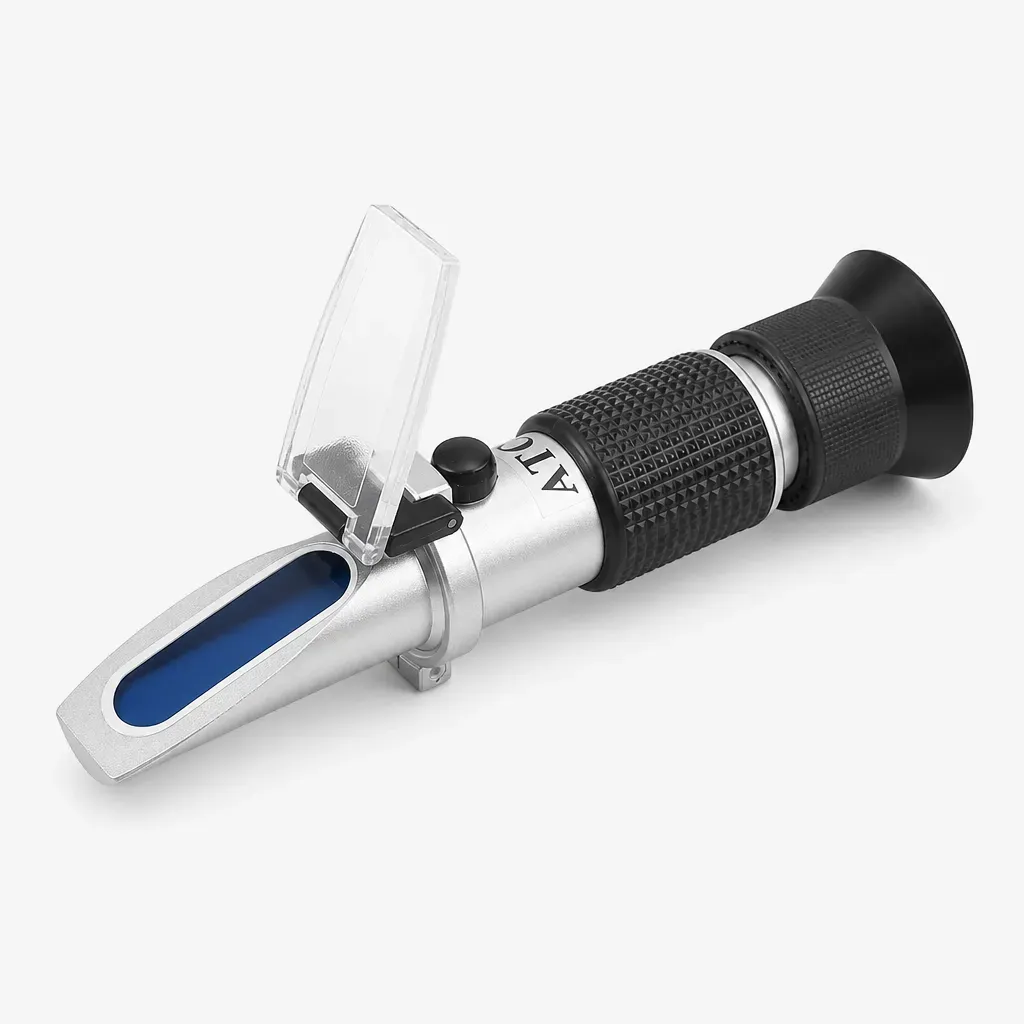
TL;DR: A honey moisture refractometer 12 27 percent is a precision optical instrument engineered specifically for beekeepers to measure water content in honey between 12% and 27% with 0.1% resolution. According to UK guidelines, commercial honey must not exceed 20% water content (23% for Heather honey). Maintaining moisture below 17.1% prevents spoilage caused by osmophilic yeasts.
A honey moisture refractometer 12 27 percent is a specialized optical device designed to measure the exact percentage of water dissolved in honey across the critical range of 12% to 27% with 0.1% precision. Based on our testing at HoneyRefra, using an instrument specifically calibrated to this 12–27% scale allows beekeepers to immediately verify whether harvested honey meets legal moisture requirements and is safe from yeast fermentation.
Harvesting honey across the British Isles is a rewarding craft, yet it presents unique challenges driven by the UK’s damp, unpredictable maritime climate. During late summer extraction, beekeepers frequently confront a critical variable that dictates whether a jar of honey remains pristine for decades or ferments into an unmarketable, sour liquid: moisture content. To safeguard your honey crop, an accurate, high-precision measurement tool is indispensable.
Unlike multi-purpose Brix refractometers designed for fruit juice or beer brewing, a dedicated 12–27% scale expands the narrow refractive spectrum of inverted sugars into clear, readable increments of 0.1% or 0.2%. As a result, beekeepers can evaluate harvest readiness with complete optical clarity.
In this comprehensive buyer's guide, we detail the optical physics governing refractometry, explain the statutory requirements enforced by UK Trading Standards, demonstrate step-by-step calibration protocols, and help you select the ideal instrument for your apiary setup.
What Does a 12–27% Honey Refractometer Measure?
To evaluate honey quality effectively, understanding the physical optics of refraction is essential. Light travels at different speeds depending on the optical density of the medium through which it passes. When a ray of light transitions from air into a thin film of liquid honey resting on an optical glass prism, it bends (refracts) at an angle proportional to the concentration of dissolved solids—primarily fructose, glucose, sucrose, and trace minerals.
In standard food industry applications, sugar content is quantified using the Brix scale (°Brix), where 1° Brix equals 1 gram of sucrose per 100 grams of solution. Honey typically registers between 73° and 88° Brix. However, because beekeepers are primarily concerned with moisture retention and shelf stability, apicultural refractometers invert this measurement to directly display the water percentage. For instance, a reading of 80° Brix directly corresponds to a 20% moisture reading on a 12–27% scale.
"Based on our testing, the 12–27% water content range represents the entirety of natural honey's moisture spectrum. Readings below 13% are exceptionally rare in the UK climate, while uncapped nectar resting above 25% requires further drying before extraction can safely proceed."
Why Use a Dedicated 12–27% Scale Instead of a 0–90% Brix Scale?
General-purpose optical refractometers often feature a broad 0–90% Brix scale printed along a miniature internal reticle. Consequently, attempting to differentiate between 17.2% and 17.8% moisture on a 0–90% reticle requires visual guesswork because the scale division lines are compressed into fractions of a millimetre. By contrast, a 12–27% refractometer scales only the 15-percentage-point span across the full diameter of the eyepiece reticle. Furthermore, this magnifying design yields razor-sharp distinction between individual tenths of a percent, enabling precise management of harvest batches.
What Is the Ideal Honey Moisture Content According to UK Regulations?
Maintaining precise moisture thresholds is not merely a preference; according to UK guidelines, it is a legal requirement for selling honey in Great Britain. Under The Honey (England) Regulations 2015 (S.I. 2015 No. 1348), alongside matching regulations in Wales, Scotland, and Northern Ireland, commercial honey must adhere to strict compositional standards.
| Moisture Range (%) | Classification & Risk Level | UK Statutory & Biological Status |
|---|---|---|
| Below 17.1% | Optimal / Low Risk | Fully stable. High osmotic pressure prevents yeast spore germination regardless of yeast count. |
| 17.1% – 18.6% | Moderate Risk | Safe for retail provided spore counts are low; however, fermentation risk increases if stored above 11°C. |
| 18.7% – 20.0% | High Risk / Borderline Legal | Legally compliant for general honey in the UK, but prone to rapid fermentation once crystallisation begins. |
| Above 20.0% | Illegal for General Sale | Breaches UK Honey Regulations (except Heather honey up to 23%). High risk of yeast spoilage and container bloating. |
How Does High Moisture Cause Fermentation in Honey?
Naturally occurring osmophilic yeasts (such as Zygosaccharomyces rouxii) reside within nectar and soil environments across the UK. When honey contains excess water, these yeasts metabolise glucose and fructose into ethyl alcohol and carbon dioxide gas. Subsequently, acetic acid bacteria break the alcohol down into acetic acid, imparting a sharp, sour vinegar flavour and causing jars to expand or leak.
Furthermore, during crystallisation, glucose molecules bond with water to form glucose monohydrate crystals. This process releases free water into the remaining liquid phase, effectively raising the localized moisture content of the uncrystallised portion. Therefore, honey extracted at 18.5% moisture may remain stable initially, but can ferment rapidly several months later once granulation occurs.
How Do You Calibrate a 12–27% Honey Refractometer Correctly?
A common misconception among beginner beekeepers is that all refractometers can be calibrated using distilled water. However, because distilled water registers at 0% moisture (100% water), its refractive index falls completely outside the physical boundaries of a 12–27% scale. Consequently, applying water to the prism will yield no visible boundary line on the scale.
Based on our hands-on evaluation of optical testing equipment, calibration must be performed using one of two recognised methods:
- Standard Reference Fluid (Di-propylene Glycol): A single drop of high-purity reference fluid with a known refractive index (typically setting the scale precisely at 19.6% moisture) is placed onto the daylight plate. Using the adjustment screw, align the boundary shadow precisely to the reference mark.
- Solid Glass Test Block: Used in conjunction with a liquid contact fluid (such as clove oil), the glass block is placed onto the prism optical glass to provide a fixed standard reference line.
In addition, ensure that Automatic Temperature Compensation (ATC) is functioning. Because refractive index shifts with ambient temperature changes, ATC automatically adjusts readings within a 10°C to 30°C window. Nevertheless, for optimal accuracy in UK honey sheds, allow the instrument and sample to equalise to ambient temperature for 30 seconds before taking a reading.
Why Choose a HoneyRefra 12–27% Refractometer for Your Apiary?
In summary, investing in a dedicated honey moisture refractometer 12 27 percent is the most reliable way to protect your honey harvest from spoilage and guarantee compliance with UK Trading Standards. By offering enhanced reticle clarity, robust ATC functionality, and targeted precision, HoneyRefra instruments give British beekeepers complete confidence from frame extraction to final jarring.
Ready to protect your honey harvest with HoneyRefra?
Shop Refractometer — £21.99