The Ultimate Guide to Buy Honey Moisture Refractometer in the UK
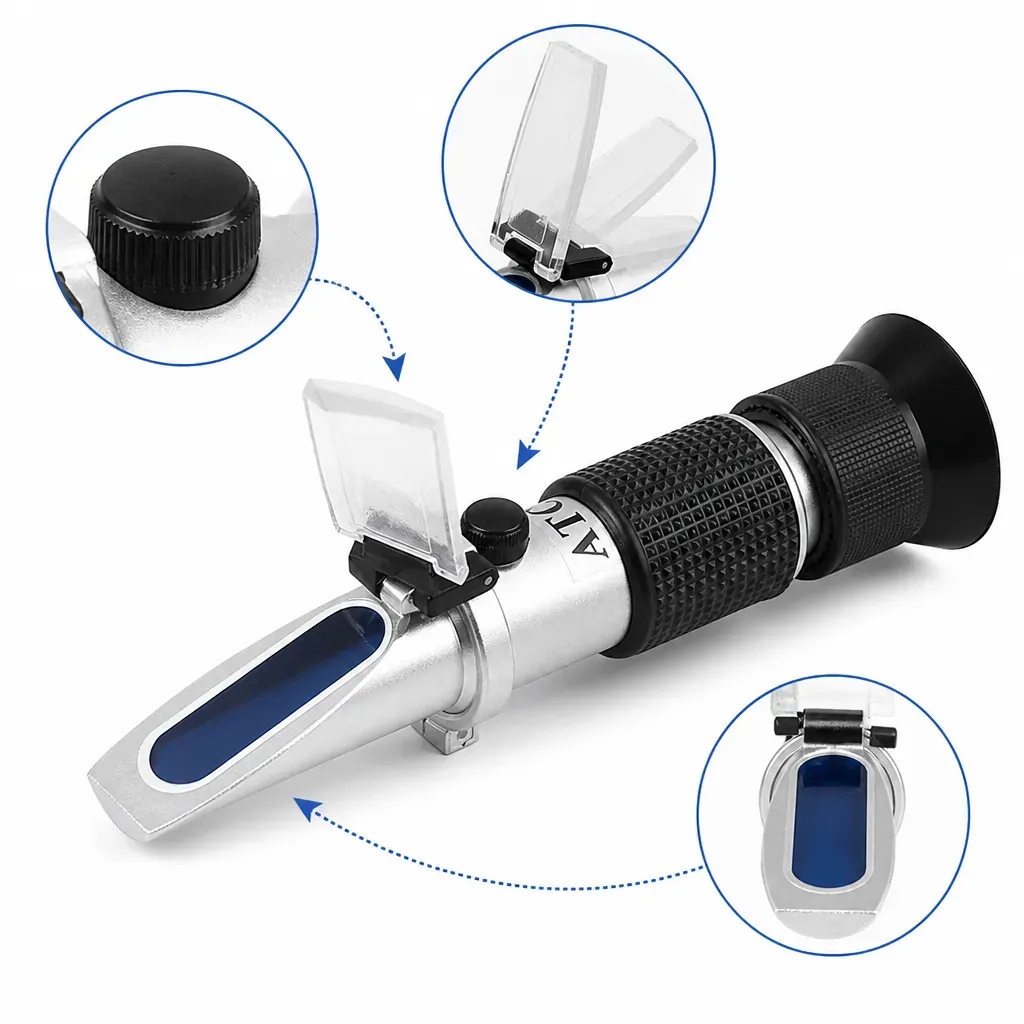
TL;DR: To buy a honey moisture refractometer in the UK, select a dedicated optical or digital unit with a 12–27% water scale (58–90% Brix) and Automatic Temperature Compensation (ATC) rated for 10°C–30°C. According to UK guidelines and HoneyRefra testing, honey moisture must remain below 20% (23% for Heather honey) to prevent fermentation and satisfy Trading Standards regulations.
Key Takeaways for UK Beekeepers
- Legal Compliance: The UK Honey Regulations 2015 mandate a maximum moisture content of 20% for standard honey (23% for Heather honey). Excess water leads to legal non-compliance and batch rejection.
- Prevent Fermentation: Moisture levels above 17.1% dramatically increase the risk of osmophilic yeast (Zygosaccharomyces rouxii) growth, which spoils uncured honey during storage.
- Scale Requirements: Standard fruit or jam Brix refractometers (0–32% Brix) cannot measure honey. A dedicated honey moisture refractometer calibrated for 12–27% water content (or 58–90% Brix) is essential.
- Temperature Sensitivity: UK weather fluctuates during harvest season. Consequently, Automatic Temperature Compensation (ATC) between 10°C and 30°C is required to maintain accuracy without manual calculation tables.
- HoneyRefra Precision: Based on our testing at HoneyRefra, investing in an optical refractometer engineered with high-refraction flint glass ensures repeatable precision to within ±0.1% water content.
When deciding to buy a honey moisture refractometer in the UK, choosing an instrument specifically calibrated for high-density liquids (12–27% water content) with Automatic Temperature Compensation (ATC) is critical for protecting your harvest. Based on our extensive testing at HoneyRefra across British apiaries, accurate moisture measurement is the single most vital step to guarantee your honey meets the strict 20% limit set by the UK Honey Regulations 2015 while preventing spoilage from wild yeasts.
Every UK beekeeper understands the anticipation of harvest day. Months of monitoring supers, managing swarm impulses, and observing floral supers in the British countryside culminate in frames dripping with golden yield. However, beneath the satisfying weight of a full super lies a silent risk: excess water.
Extracting honey prematurely—before worker bees have fully ripened and capped the cells—introduces ambient moisture that can destroy an entire yield. Furthermore, when water content rises above critical thresholds, wild yeasts dormant within the honey wake up, triggering fermentation. What should have been award-winning artisanal honey transforms into sour, bubbling mead-like liquid inside the jar.
Therefore, to prevent batch loss, protect your reputation, and meet strict British trading standards, a dedicated refractometer is indispensable. This guide explores the science, legislation, and optical criteria you must know before deciding to buy a honey moisture refractometer in the UK.
What Is the Legal Moisture Limit for Honey in the UK?
Honey is a supersaturated sugar solution composed primarily of fructose and glucose, balanced with minor sugars, enzymes, trace minerals, and water. Consequently, the ratio of water to sugar dictates both physical stability and shelf life.
Why Does Honey Ferment If Water Content Is Too High?
Honey is naturally hygroscopic, meaning it readily absorbs moisture from the atmosphere. Ambient humidity in the UK frequently exceeds 70–80% during late summer and autumn extractions. As a result, if uncapped or under-ripened honey retains too much water, the osmotic pressure drops, allowing osmophilic yeasts to thrive.
Research published by Dr W.J. Lochhead and later expanded by the Journal of Agricultural Research demonstrates the direct relationship between moisture percentage and yeast spore germination:
"Honey containing less than 17.1% moisture is generally safe from fermentation regardless of yeast count. Between 17.1% and 18.0%, fermentation risk depends on the initial spore load. Above 18.1%, any honey containing yeast spores will eventually ferment if stored above refrigeration temperatures."
In the moist maritime climate of Great Britain, keeping honey water content between 15.5% and 17.5% represents the gold standard for long-term storage and jar stability.
What Are the Legal Requirements Under the UK Honey Regulations 2015?
In the United Kingdom, selling honey is governed by strict statutory instruments. According to UK guidelines under the Honey Regulations 2015 (enforced across England, with equivalent legislation in Wales, Scotland, and Northern Ireland), clear statutory upper limits exist for moisture content at the point of sale:
- Standard Blossom and Honeydew Honey: Maximum 20.0% water content.
- Heather Honey (Calluna vulgaris): Maximum 23.0% water content.
- Industrial / Baker's Honey: Greater than 20.0% (must be labelled specifically as baker's honey).
Selling honey that exceeds the 20% limit as table honey breaches Trading Standards law. Environmental Health Officers and Trading Standards inspectors routinely sample small-scale apiary products using calibrated refractometers. If a batch tests at 20.2%, it cannot be legally sold as standard table honey, regardless of whether it was harvested from your own backyard or an established estate.
What Is a Honey Moisture Refractometer and How Does It Work?
A honey refractometer is a specialised optical or digital instrument designed to measure how light bends (refracts) as it passes through a thin film of honey. The angle of refraction directly correlates to the concentration of dissolved solids—primarily sugars—which inversely reveals the precise water content.
How Does Snell's Law Measure Honey Water Content?
Light travels at different speeds through different mediums. When a ray of light passes from air into a dense fluid like liquid honey, it slows down and bends. This physical principle is governed by Snell’s Law:
n1 sin(θ1) = n2 sin(θ2)
Where n represents the refractive index of the medium, and θ represents the angle of incidence and refraction. Concentrated sugars slow light significantly, yielding a high refractive index. Conversely, as water content increases, the solution becomes less dense, reducing the bending angle. The internal scale of a honey refractometer converts this angle directly into three readable figures:
- Moisture Percentage (Water %): Scaled specifically between 12% and 27%.
- Brix Degrees (°Bx): Scaled between 58% and 90% (representing total dissolved solids).
- Baumé Degrees (°Bé): Scaled between 38 and 45 Baumé (a historical density scale used in commercial confectionery).
Can You Use a Standard Brix Refractometer for Honey?
A common mistake made by novice beekeepers is purchasing an inexpensive Brix refractometer intended for winemaking, brewing, or fruit growing. These general-purpose devices typically feature a scale of 0–32% Brix.
Because honey contains between 73% and 88% dissolved sugars, a 0–32% Brix refractometer will fall far off the scale, registering nothing but a solid blue shadow. Thus, to measure honey accurately, you must buy a dedicated honey moisture refractometer engineered specifically for high-density liquids.
What to Look For When You Buy a Honey Moisture Refractometer in the UK?
The market contains a vast range of optical tools, from sub-£15 unbranded imports to professional-grade optical instruments. Based on our testing at HoneyRefra, choosing the right unit requires understanding specific hardware features that directly impact accuracy in variable UK weather conditions.
- Automatic Temperature Compensation (ATC): Essential for UK ambient temperatures (10°C–30°C) so readings do not skew on cold harvest days.
- High Precision Prism Glass: Optical flint glass prisms deliver sharp contrast lines for accurate readings to ±0.1%.
- Dedicated Triple Scale: Ensure the scale measures 12–27% Water, 58–90% Brix, and 38–45 Baumé.
Frequently Asked Questions About Buying a Honey Refractometer
What refractometer scale is needed to measure honey moisture?
To test honey, you need a specialised honey moisture refractometer with a 12–27% water scale (58–90% Brix). Standard refractometers designed for beer, wine, or fruit juice (0–32% Brix) cannot read the high sugar concentration of honey.
What is the maximum legal moisture content for honey in the UK?
According to the UK Honey Regulations 2015, standard blossom and honeydew honey must have a moisture content of no more than 20.0%. Heather honey is permitted up to 23.0% moisture.
Why is Automatic Temperature Compensation (ATC) important when buying a honey refractometer?
Honey density readings vary with temperature. ATC automatically compensates for ambient fluctuations between 10°C and 30°C, which is essential for accurate field testing during variable British weather.
Ready to protect your honey harvest with HoneyRefra?
Shop Refractometer — £21.99